
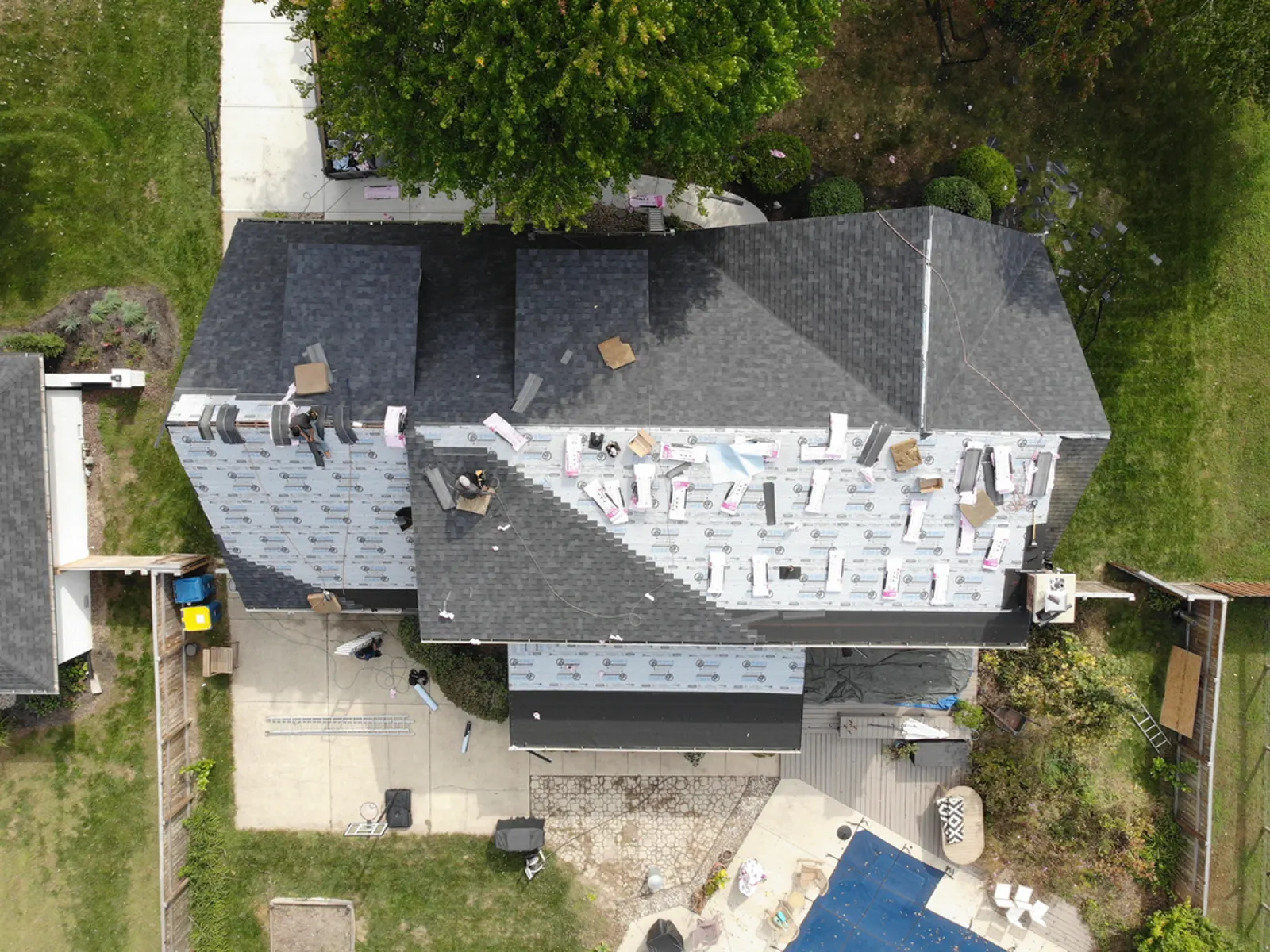
Evidence beats opinions
Every roofer in Indiana will give you an opinion about your roof. We'd rather give you photographs. Our roof inspections combine an on-roof walk with drone photography of every slope, ridge, valley, and flashing detail, so the condition report you get is something you can see with your own eyes, not a story told from a ladder. On steep, tall, or fragile roofs the drone also means a complete inspection without anyone crunching brittle shingles underfoot.
Then there's the part no ladder can do: thermal imaging. Wet insulation and water-soaked decking hold heat differently than dry material, and an infrared scan makes those temperature differences visible. That finds slow leaks that haven't stained a ceiling yet, traces where water travels under the shingles, and flags ventilation problems that are quietly cooking your roof from the attic side.
When an inspection pays for itself
- After hail or wind. Greenwood and Whiteland have both taken claim-threshold hail in the last two seasons. Dated drone documentation is exactly what an insurance claim needs.
- Before you buy or sell a house. A roof is a five-figure line item. Know its real condition before it's your problem, or price yours with proof.
- A roof between 15 and 25 years old. The 1990s and 2000s subdivisions around Center Grove and Greenwood are full of roofs in this window. An inspection tells you whether you have five more years or five more months.
- A leak nobody can find. Thermal imaging traces water paths that visual inspections miss.
- Peace of mind before winter. Ice dams exploit every weakness a summer inspection would have caught.
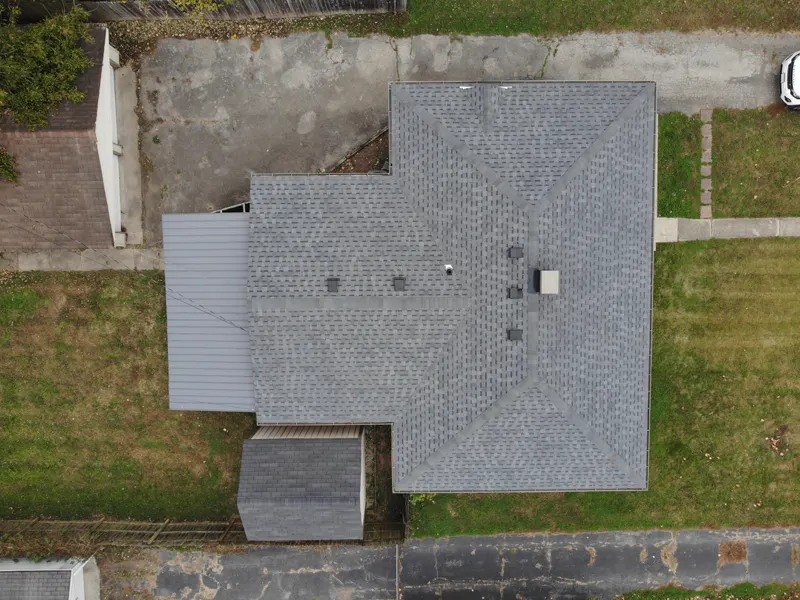
What you walk away with
A plain-English condition report with the drone photos, thermal findings where relevant, and our honest read: leave it alone, repair this one detail, or start planning a replacement. If the answer is "your roof is fine," that's what we'll say. An inspection that always ends in a sales pitch isn't an inspection.
Inspection questions, answered first
Storm damage checks are free, always. Full documented condition reports with thermal imaging for real estate or planning purposes are quoted up front, and cost is credited if we end up doing the work.
Temperature differences. Wet insulation, soaked decking, and air leaks show up as thermal patterns, which lets us find moisture problems before they become visible stains, and pinpoint where a mystery leak actually enters.
Yes. Dated drone photos of every slope are the backbone of the storm claims we support, and we meet the adjuster on the roof with the evidence in hand.